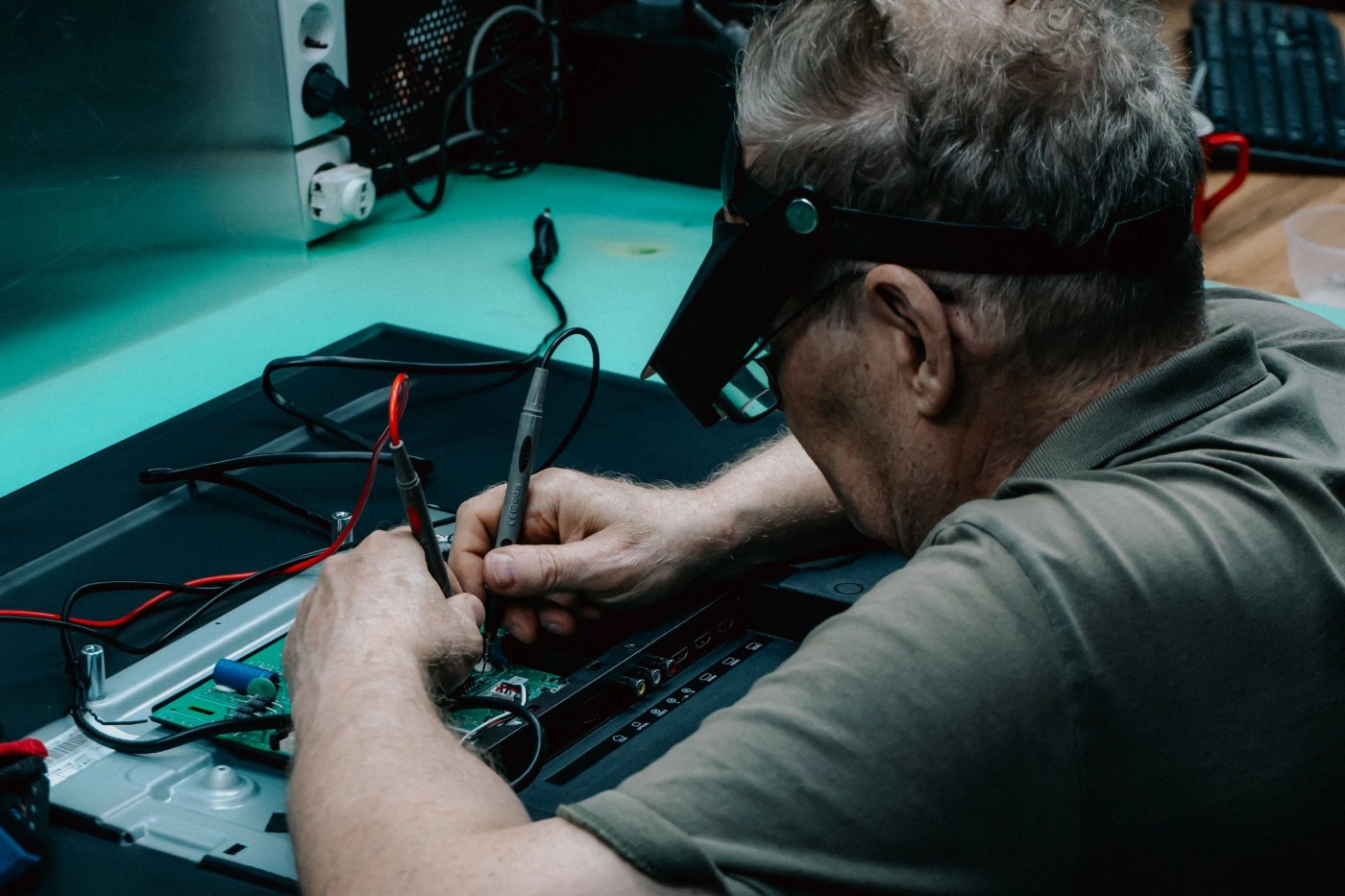
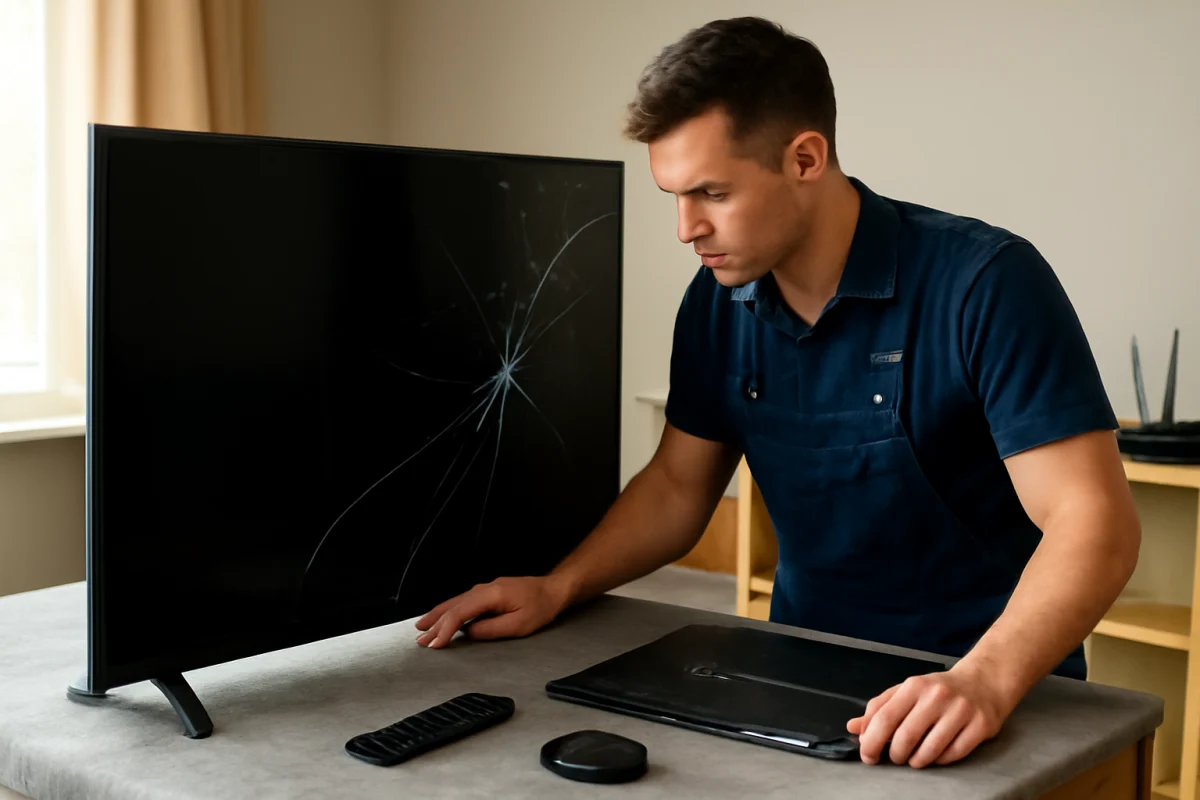
If your Samsung TV has a crack, spreading black patches, colored lines, or a large area that no longer displays a picture, the screen panel is probably damaged. In most cases, replacing the panel is technically possible but financially difficult because the panel is usually the most expensive part of the television. Before ordering parts or opening the TV, confirm that the problem is actually the panel and not a loose cable, external device, or backlight failure.
Start with the lowest-risk checks. Turn the TV off, unplug it from the wall for a few minutes, and disconnect every HDMI device, USB device, antenna cable, and other accessory. Reconnect power and test the TV's built-in menu or home screen. If the menu appears normally but one connected device has lines or no picture, the screen may be fine. For related Samsung troubleshooting, you can also review the Samsung TV troubleshooting guides on TV Fix Guide.
How to Tell Whether the Samsung TV Screen Is Damaged
A damaged display panel usually produces symptoms that remain visible regardless of the input source. The most useful test is to open the TV's home screen, settings, or volume display. The exact button and menu names can vary by Samsung model and remote, but any built-in on-screen graphic can help separate a panel problem from an HDMI or streaming issue.
Signs of a physically damaged panel
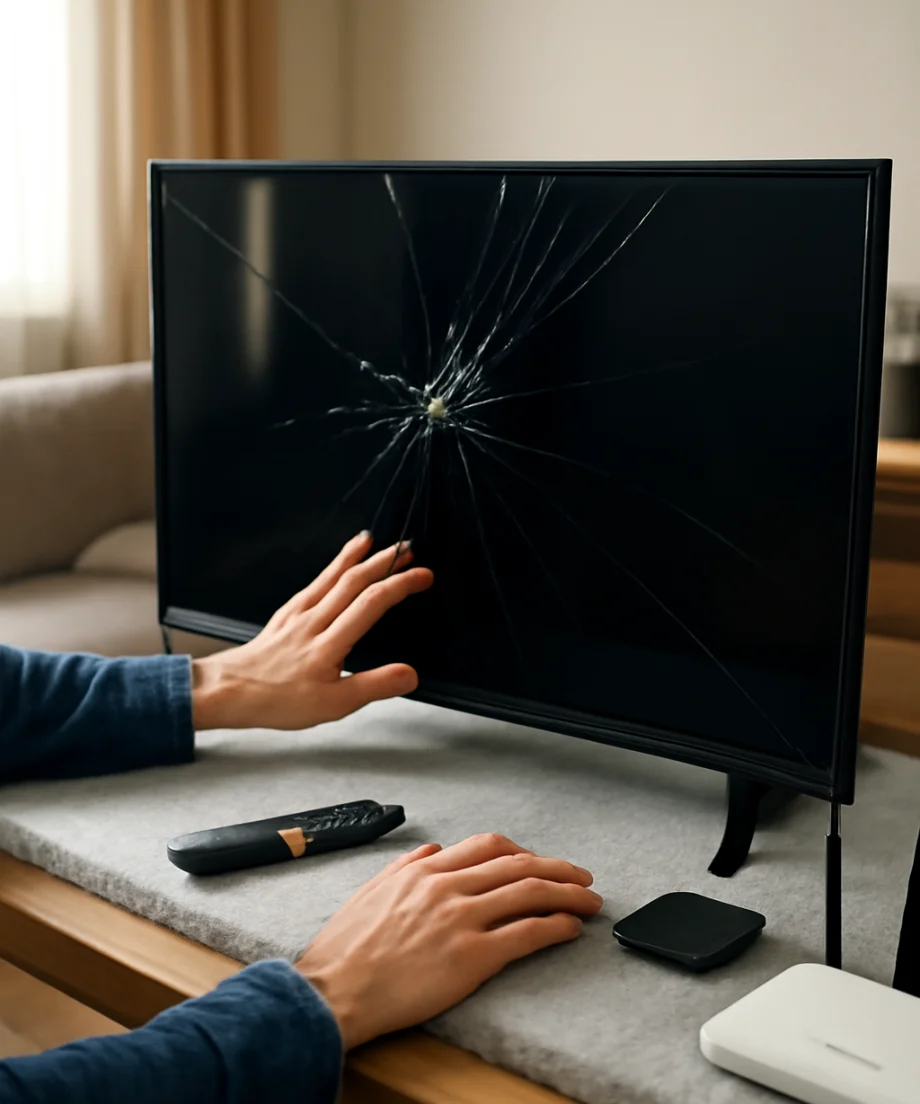
- A visible crack, impact mark, or spiderweb pattern on the glass or display surface.
- Black or dark blotches that look like spilled ink and do not move when the input changes.
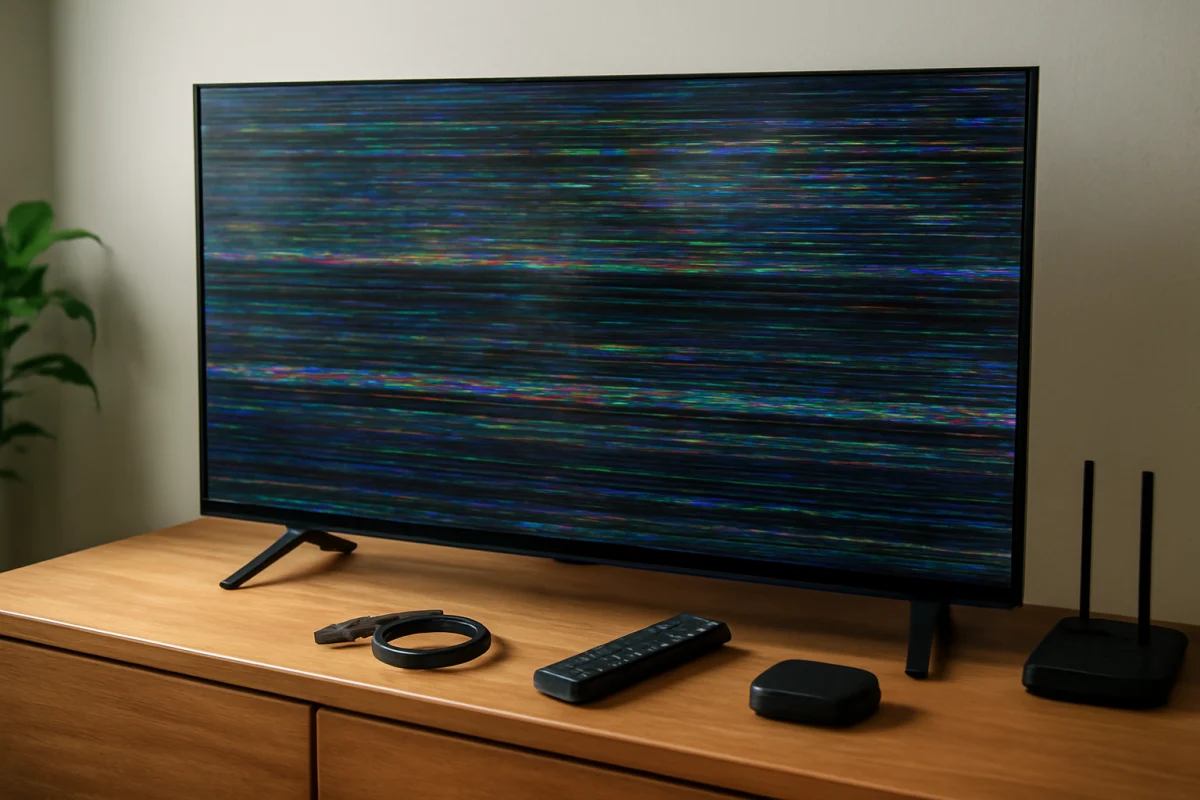
- Vertical or horizontal lines that remain on the home screen and every input.
- A section of the image that is permanently missing, distorted, or filled with fixed colors.
- Flickering or flashing that began immediately after the TV was hit, dropped, or moved.
- Glass that appears separated, bent, or damaged around the bezel.
Do not press the screen to see whether the picture changes. Pressure can spread damage and may create additional lines or dark areas. Avoid wiping a cracked panel with liquid, and do not attempt to tape the glass together. Modern flat-panel displays are fragile, and even a panel that still works can fail after further handling.
Problems that can look like screen damage
Not every blank or dark screen requires a screen replacement. A failed backlight can leave the TV producing sound while the image is extremely dim. To check for this possibility, turn on the TV in a dark room and shine a flashlight at an angle across the screen while audio is playing. If you can barely see menus or moving images, the display panel may still be working while the backlight system has failed. This test is not definitive, but it can prevent you from ordering the wrong part. See our guide to a Samsung TV screen that is dark but still producing sound for more diagnosis.
Other possible causes include a defective power board, main board, timing-control circuit, internal ribbon cable, or software issue. If the picture returns after a complete power cycle, appears only on one input, or changes when you move a cable at the connected device, a panel replacement is not the first step. For an HDMI-specific problem, use the diagnostic steps in our guide to Samsung TV HDMI no signal after connecting a console.
What a Samsung TV Screen Replacement Involves
A screen replacement does not usually mean replacing a small piece of glass. The display panel is a large, delicate assembly that may include the glass, display layers, driver electronics, and attached components. The exact construction depends on the TV model, screen size, and display type. Samsung model families can use different panels, so a part that looks similar may not be electrically or physically compatible.
During a panel replacement, the television must be placed face down on a clean, completely flat surface. The rear cover, internal boards, speakers, cables, bezel, and panel frame may need to be removed in a specific order. The new panel must then be aligned without bending or twisting it. A small mistake can damage ribbon cables, scratch the display, disconnect a diffuser layer, or break the replacement panel before the TV is tested.
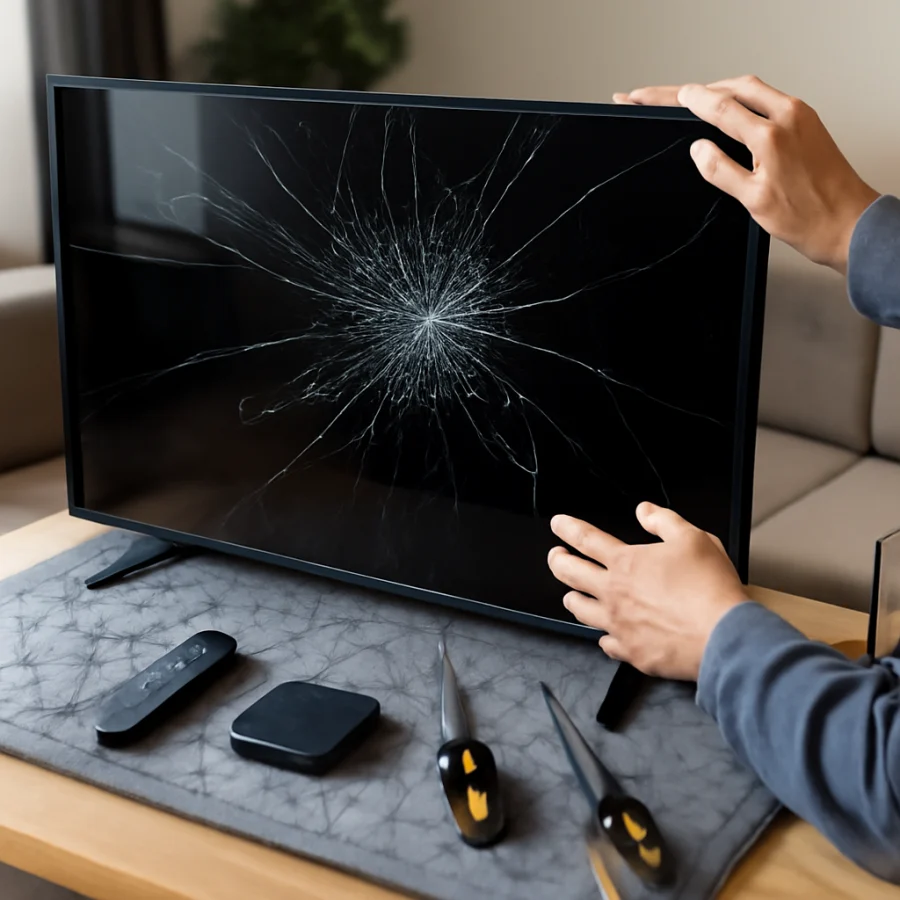
This is why screen replacement is not a good first repair for most people. Even if you are comfortable replacing boards or computer parts, a large TV panel is difficult to handle safely. Two people may be needed for larger models, and the work area must be wide enough to support the entire display without pressure points.
Should You Repair or Replace the TV?
For a cracked panel, the practical answer is often to replace the television rather than replace the screen. The panel, shipping, labor, and risk of damage can approach or exceed the cost of a comparable new TV. This is especially true when the TV is older, has other faults, or uses a large display.
Do not rely on a generic online price or a repair estimate for another Samsung model. Replacement cost depends on the exact model number, screen size, availability of the panel, labor in your area, and whether the part is new, used, refurbished, or salvaged. Some panels may be unavailable even when the TV is otherwise recent. Ask a repair shop for a written estimate that separates the panel, labor, shipping, diagnostic fee, and any warranty.
Compare the complete repair estimate with the cost of a replacement TV that offers similar size and features. Also consider whether the repaired TV will have coverage for the new panel and labor. A low-cost used panel may have scratches, uneven brightness, dead pixels, or a limited return period. A shop should explain those risks before you approve the work.
When repair may make sense
Panel replacement can be more reasonable when the TV is relatively new, has a high-end display, is covered by a valid protection plan, or has strong sentimental or installation value. It may also make sense when the damage is covered by a retailer, home insurance policy, or another service agreement. Coverage terms vary, and accidental impact is often treated differently from an internal component failure, so check the actual documents rather than assuming the repair is included.
If the TV has no visible crack and the issue may be a backlight, board, or cable failure, a professional diagnosis is usually worthwhile. Those repairs can be much less expensive than replacing the panel, although the cost still depends on the model and parts availability.
How to Find the Correct Replacement Panel
Use the complete model number from the label on the TV or its documentation. Do not identify the part only by screen size, resolution, or a general product name. Samsung can sell several televisions with the same diagonal size but different internal panels and connectors.
Give the repair shop or parts supplier the full model number and describe the symptom. If possible, provide clear photos of the damage and the label. Confirm whether the quoted part is a complete panel assembly or only a smaller component. Ask whether the part is new, refurbished, used, or pulled from another TV, and ask how it will be packaged for shipping. Large glass panels can be damaged in transit, so inspect the package before signing for delivery if a carrier allows it.
Be cautious with listings that promise a universal Samsung screen or provide no exact part identification. A panel can have similar dimensions but incompatible connectors, mounting points, firmware requirements, or driver electronics. Never modify a panel connector or force a cable into place.
Safety Checks Before Any Internal Repair
Unplug the TV before removing any cover, and allow time for internal components to discharge. The power supply can contain areas that retain dangerous voltage even after the TV is unplugged. Do not work inside the TV if you are unfamiliar with electrical safety, do not bypass fuses, and do not operate the television with exposed boards unless a trained technician is performing a controlled test.
Wear clean gloves when handling the panel if the repair procedure calls for it, but remember that gloves do not protect the glass from bending. Keep pets, children, jewelry, liquids, and metal tools away from the work area. If the panel is cracked, handle the TV carefully because sharp fragments may be present behind the bezel. A professional should handle severely damaged displays or any television that was dropped.
What to Do If You Decide Not to Replace the Screen
If the panel is confirmed to be uneconomical to replace, unplug the TV and store it safely rather than continuing to use a badly cracked display. You may be able to sell it honestly for parts, recycle it through an electronics program, or ask a repair shop whether the boards and stand have salvage value. Follow local recycling requirements for large electronics and do not place the television in ordinary household trash unless local rules specifically allow it.
If there is no crack and the symptom is limited to a dim picture, lines on one input, intermittent power, or a TV that still responds to the remote, seek a diagnosis before buying a panel. Low-risk checks and the correct model information can prevent an expensive parts mistake. In many cases, the best Samsung TV screen replacement decision is not to replace the panel at all, but to identify whether a smaller repair can restore the picture or whether replacing the entire TV is safer and more economical.
Comments
0No comments yet. Be the first to share a helpful note or question.
Leave a Comment
Your email address will not be published. Comments are reviewed before appearing on the site.