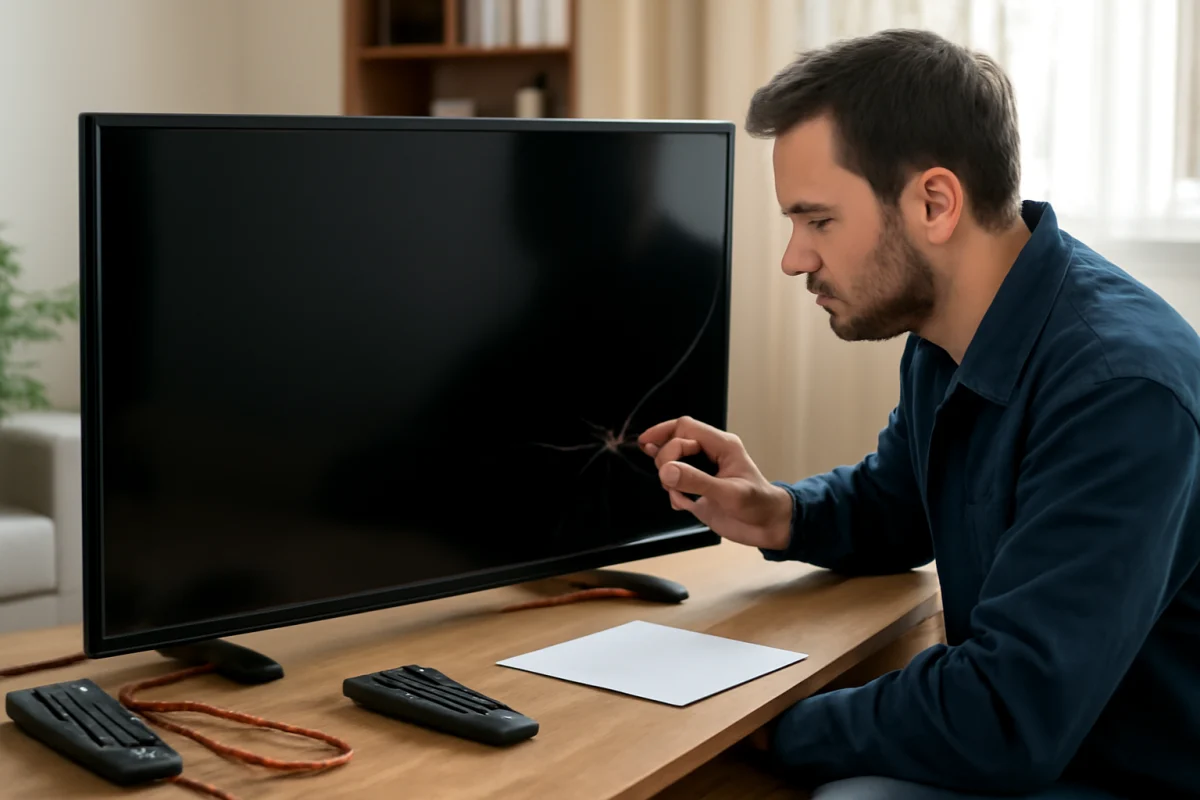
Fixing a Toshiba TV screen can cost anywhere from a relatively small diagnostic or labor fee to nearly as much as buying another television. The biggest factor is the type of damage. A loose cable, input problem, or backlight fault may be repairable at a reasonable cost, while a cracked LCD or LED panel is usually an expensive replacement job.
As a practical rule, ask for a written estimate before approving any work. If the quote approaches the price of a comparable new TV, replacement is often the more sensible option. The exact amount depends on the Toshiba model, screen size, panel availability, local labor rates, warranty status, and whether the problem is actually the screen.
Typical Toshiba TV screen repair costs
There is no single price that applies to every Toshiba television. Parts and labor can vary substantially between an older budget model and a larger, newer smart TV. The following are planning ranges rather than guaranteed prices:
- Diagnosis or inspection: Some repair shops charge a separate inspection fee, while others apply it toward the repair. Ask before taking the TV in.
- Loose connection or minor internal repair: These problems may cost less than a major component replacement, although labor can still make up much of the bill.
- Backlight repair: Replacing LED strips or related parts can be less expensive than replacing the entire panel, but the TV often has to be opened and carefully disassembled.
- Power board or main board repair: Costs depend on whether the board can be repaired, refurbished, or replaced. Board availability is especially important for older models.
- Complete screen or panel replacement: This is commonly the most expensive repair. The panel may be difficult to source, and labor is added to the part cost.
For many modern flat-screen TVs, a cracked panel is financially difficult to justify repairing. A panel can represent most of the television's original value, and shipping a large replacement part adds risk and expense. A repair shop should be able to tell you whether the estimate covers the panel, labor, shipping, disposal, and any additional diagnosis.
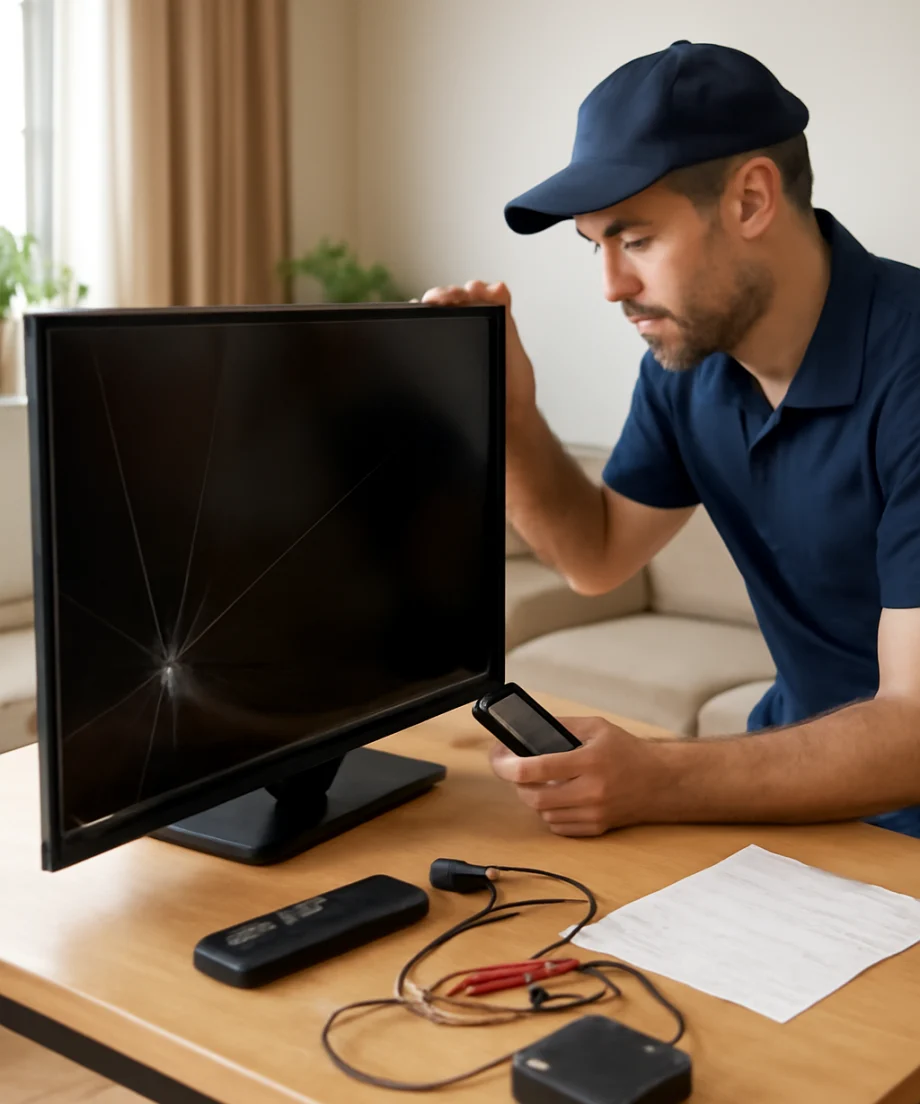
First, determine whether the screen is actually damaged
A dark, blank, or distorted picture does not automatically mean the screen panel is broken. Before arranging an internal repair, perform a few low-risk checks. They can prevent you from paying for a panel replacement when the real problem is an external device, cable, setting, or smaller internal component.
Check the physical glass and frame
Look at the display while the TV is turned off. Cracks, spiderweb patterns, black spreading areas, impact marks, and visible liquid damage usually point to physical panel damage. Lines that begin at an impact point or a section of the image that stays permanently shattered are also strong warning signs.
Do not press on the display, even if the picture appears to change when you touch the bezel. Pressure can spread damage and may create additional faults. Never use a liquid cleaner directly on the screen. If the panel is cracked, avoid operating the TV for long periods and keep children and pets away from broken glass.
Test the TV's own menus or home screen
Disconnect external devices such as a cable box, game console, streaming stick, or Blu-ray player. Use the Toshiba remote to open the TV's built-in menu or home screen if possible. If menus appear normally, the panel is producing an image and the problem may be related to the source device, cable, or input selection.
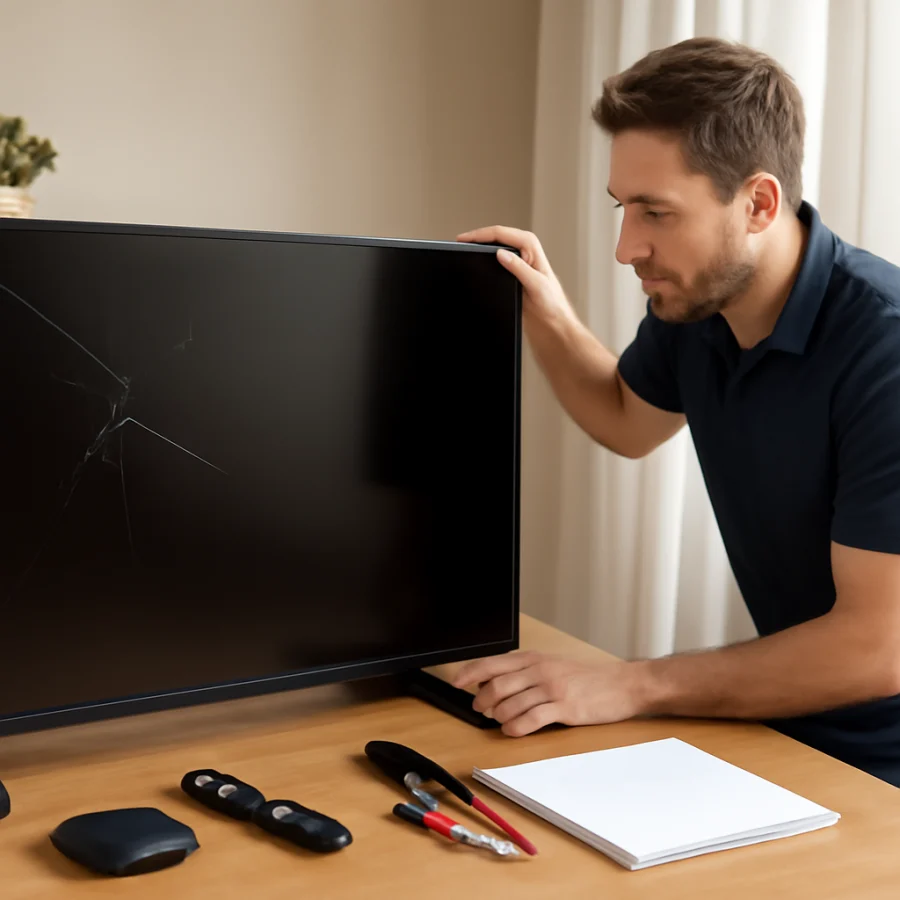
If the menu is also missing, very dim, covered by lines, or discolored, the fault is more likely to be inside the TV. That still does not prove the panel itself is bad. A backlight, power supply, main board, or display-control connection can create similar symptoms.
Try a different source and cable
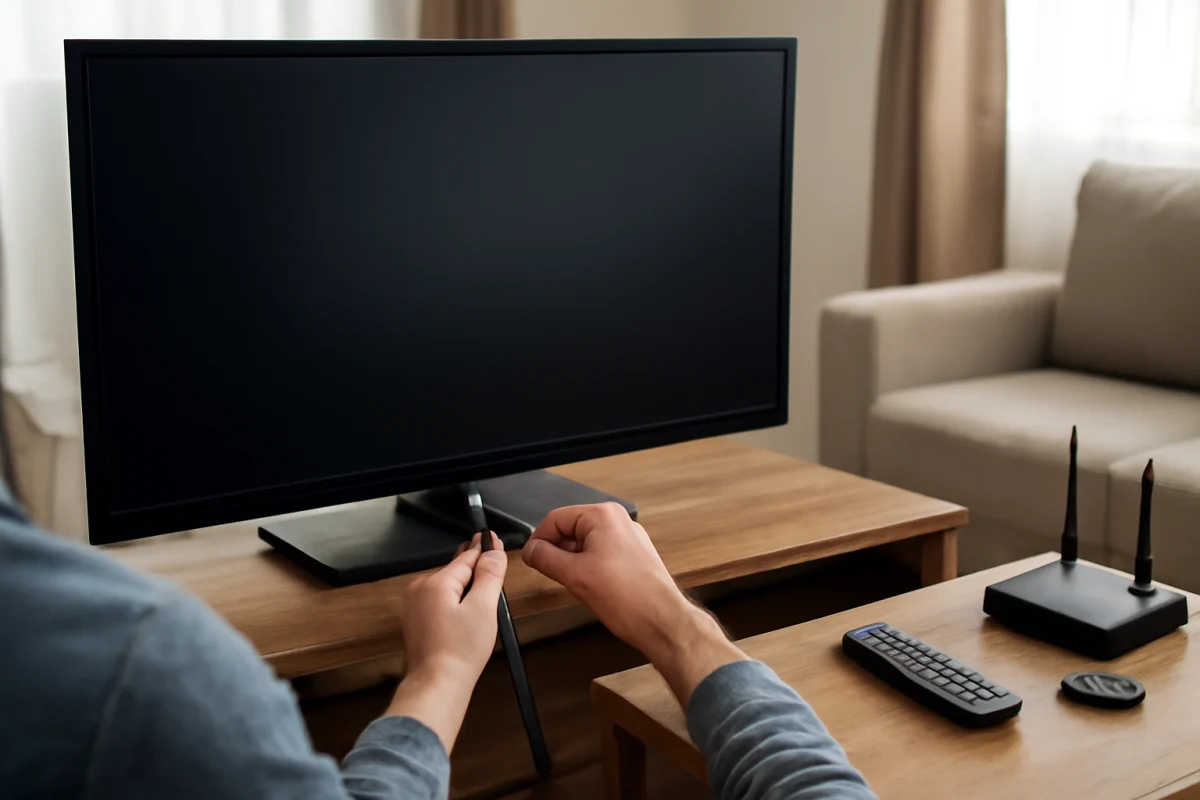
Reconnect one source at a time and select the matching input. Try another known-working HDMI cable and, if available, another device. A loose cable can cause a blank screen, flashing image, missing colors, or intermittent picture. Avoid repeatedly plugging and unplugging cables while the TV is powered on if the connection feels damaged or unusually loose.
If only one device has the problem, the TV screen may be working correctly. Troubleshooting the connected equipment can be more useful than arranging a Toshiba screen repair. You can find additional guidance in the TV picture and sound troubleshooting section.
Perform a simple power cycle
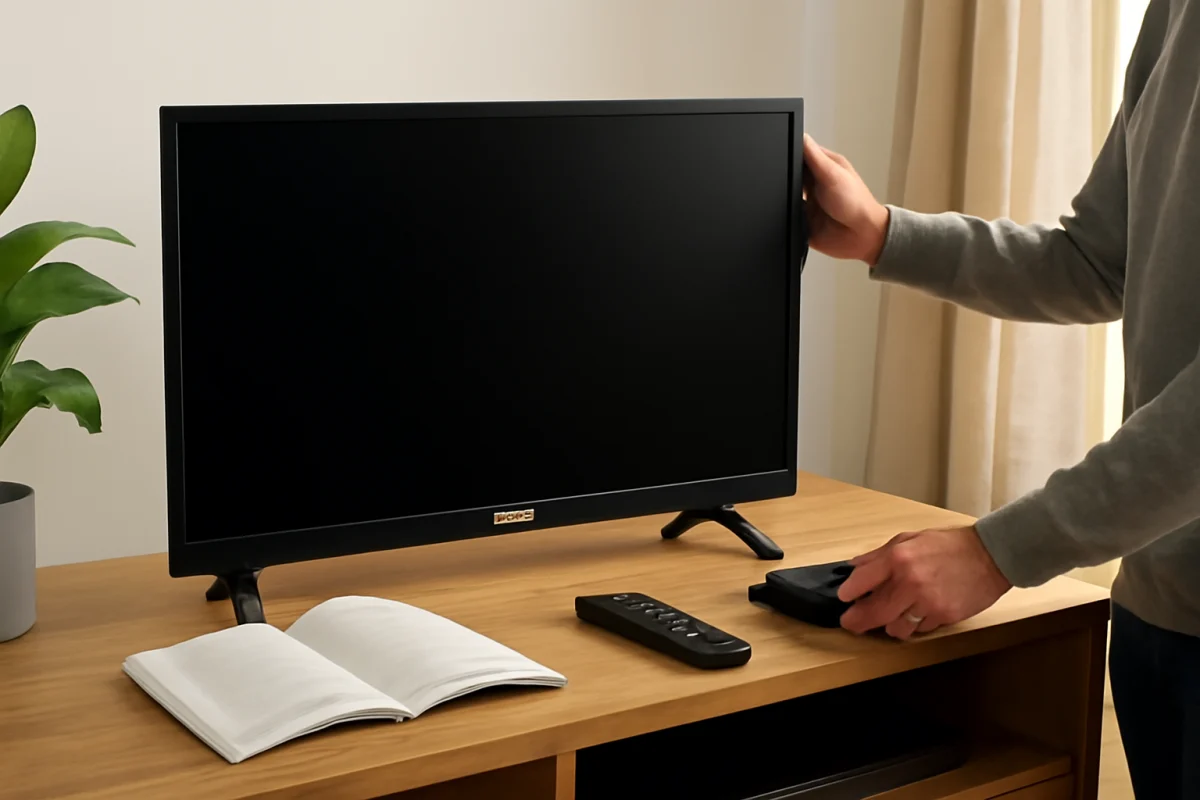
Turn the TV off, unplug it from the wall, and leave it disconnected for several minutes. While it is unplugged, press and hold the TV's physical power button briefly if the set has one. Then reconnect it directly to a known-working wall outlet and turn it on.
This is a low-risk step for temporary startup or control problems. It will not repair a cracked panel, and it should not be confused with a factory reset. Do not open the cabinet or attempt advanced service procedures unless you are trained to work safely around electronic equipment.
What different screen symptoms can mean
Cracked glass or impact damage
A cracked LCD or LED panel is generally not a calibration or software issue. The visible image may show spreading black areas, colored lines, blotches, or a completely blank section. Panel replacement is usually the only true repair, and the part may not be economical to install.
Do not assume that an extended warranty or store protection plan covers accidental impact. Coverage varies by plan, seller, purchase date, and the documented cause of damage. Check your paperwork before paying for a repair.
Sound works but the screen is black
If you hear audio but see no picture, shine a small flashlight at an angle toward the screen while content is playing. If you can faintly see an image, the backlight system may have failed. This test is only an indication, not a final diagnosis, and the flashlight should not touch the panel.
A completely black screen can also result from a power board, main board, display connection, or panel fault. A technician may need to test voltages and internal components to identify the cause.
Lines, flickering, or half of the picture missing
Intermittent lines can come from a loose internal connection, a board problem, or panel failure. If the lines remain on the TV's own menus and appear immediately after startup, the issue is less likely to be the external source. If they disappear after changing an HDMI cable or input, investigate the connected device first.
A single persistent vertical line, a half-screen image, or a large area with incorrect colors can indicate panel-related damage. Some repair shops may decline this work because the panel cannot be repaired reliably at a reasonable cost.
Dim picture or uneven brightness
A dim image may be caused by picture settings, an energy-saving mode, a failing backlight, or an aging panel. Check the picture controls without changing several settings at once. If the TV was recently moved or exposed to heat, moisture, or impact, mention that to the technician.
Why screen replacement is often expensive
The display panel is a specialized part made for a particular size and model family. Two Toshiba TVs with similar screen sizes may not use interchangeable panels. Resolution, connector placement, mounting points, revision, and internal electronics can all matter.
Panel replacement also involves careful disassembly. The thin display can bend or crack during removal, and small cables or diffuser layers can be damaged if handled incorrectly. Labor therefore includes more than simply removing a few screws. A shop may also need to locate a new, refurbished, or salvaged panel, and availability can change over time.
For these reasons, do not order a panel based only on screen size or the television's appearance. Use the complete model number from the label or settings information, and have the part confirmed by a qualified technician before purchase.
When repair is worth considering
Repair may make sense when the TV is relatively new, the damage is covered by a valid warranty or protection plan, or the fault is a board, backlight, cable, or power-related component rather than the panel. It may also be worthwhile if the TV is a larger or higher-value model and a compatible part is readily available.
Replacement is often more practical when the screen is cracked, the television is several years old, the panel is unavailable, or the repair estimate is close to the cost of a new model with similar features. Consider the total cost, not just the part price. Include diagnosis, labor, shipping, pickup or delivery, taxes, and the possibility of another unrelated failure later.
Questions to ask a repair shop
- What component failed, and how was that diagnosis confirmed?
- Is the estimate for a panel replacement, backlight repair, board repair, or another part?
- Is the replacement part new, refurbished, used, or salvaged?
- Does the quoted price include labor, shipping, testing, and taxes?
- What warranty does the shop provide on the part and the repair?
- What happens if the technician finds additional damage after opening the TV?
- Will I be charged if I decline the repair?
Get the model number and symptoms in writing. Photos of the screen, including the TV's menus and any visible cracks, can help a shop provide an initial opinion, but a photo cannot replace hands-on testing.
Should you repair or replace the Toshiba TV?
Start with the lowest-risk checks: inspect the glass, test the built-in menus, try another source and cable, and complete a basic power cycle. If the panel is visibly cracked or the same distortion appears on every input, arrange a professional diagnosis rather than performing a factory reset or opening the cabinet.
For a confirmed panel failure, compare the full repair quote with the price of a new TV that meets your needs. For a backlight, board, or connection problem, repair may be reasonable if the part is available and the estimate is clearly below replacement cost. You can also review more Toshiba-specific troubleshooting on the Toshiba TV repair page.
The most reliable answer comes from identifying the failed part, not simply describing the picture as "broken." A careful diagnosis can save money, while a rushed panel replacement can cost more than the television is worth.
Comments
0No comments yet. Be the first to share a helpful note or question.
Leave a Comment
Your email address will not be published. Comments are reviewed before appearing on the site.