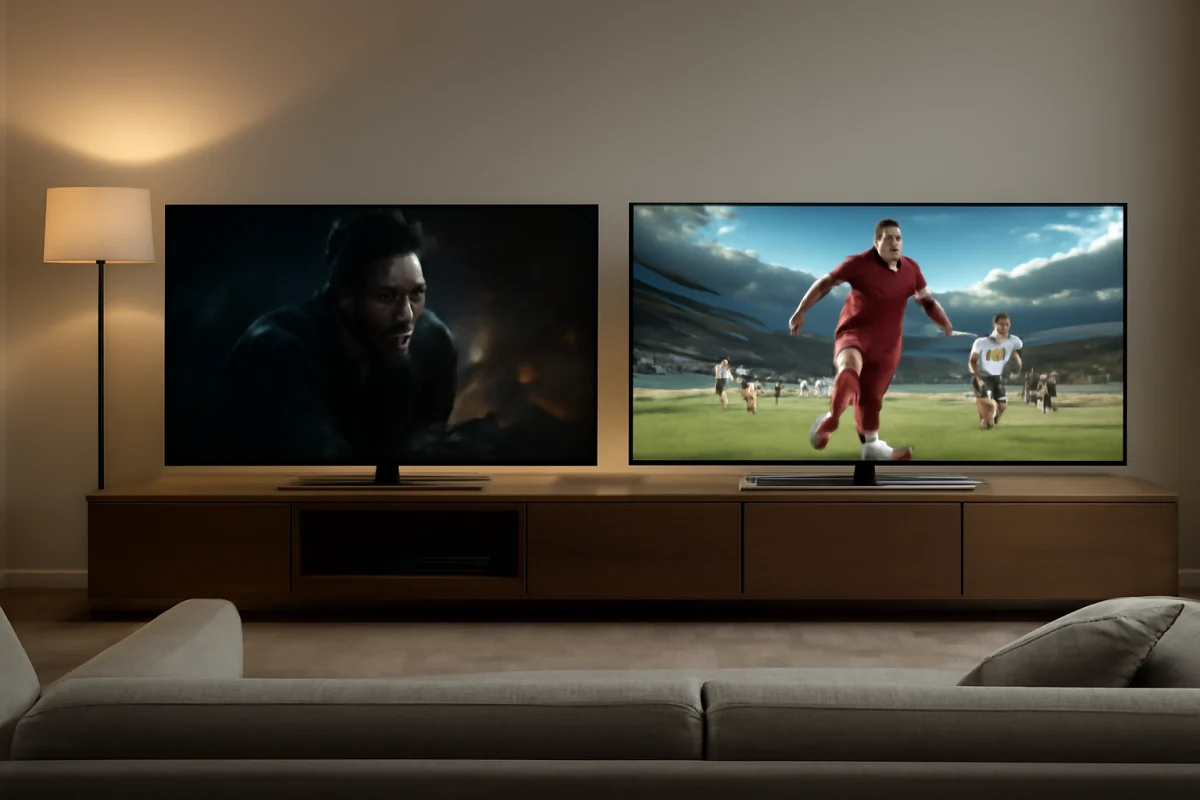
For most movie fans, Sony is the better overall choice because its picture processing, upscaling, and natural motion handling are consistently strong. For sports fans who want a large, bright screen without moving into a higher price range, Hisense can be the better value. The right choice depends on the specific model, room lighting, viewing distance, and the quality of the content you watch.
Brand comparisons are useful, but they cannot replace a model-to-model check. Sony and Hisense sell TVs across several price levels, and the differences between two models from the same brand can be greater than the difference between the brands. Before buying, compare the panel type, refresh behavior, local dimming or backlight design, smart TV platform, available inputs, and return or support options for the exact models.
Sony vs Hisense: The short answer
| Priority | Usually the stronger choice | Why |
|---|---|---|
| Movies and TV shows | Sony | Natural processing, strong upscaling, and dependable handling of film content |
| Sports in a bright room | Hisense or Sony, depending on model | Brightness and motion features vary substantially by model |
| Large-screen value | Hisense | Often offers more screen size or features for the money, though pricing changes |
| Low-quality cable or older content | Sony | Processing can make compressed or lower-resolution sources look cleaner |
| Simple buying decision | Sony | Its image presentation is often more consistent across mixed content |
These are general tendencies, not guarantees. A well-chosen Hisense model can outperform a basic Sony model in brightness or gaming features, while a higher-end Sony can provide a more refined picture than an entry-level Hisense TV.
Which brand is better for movies?
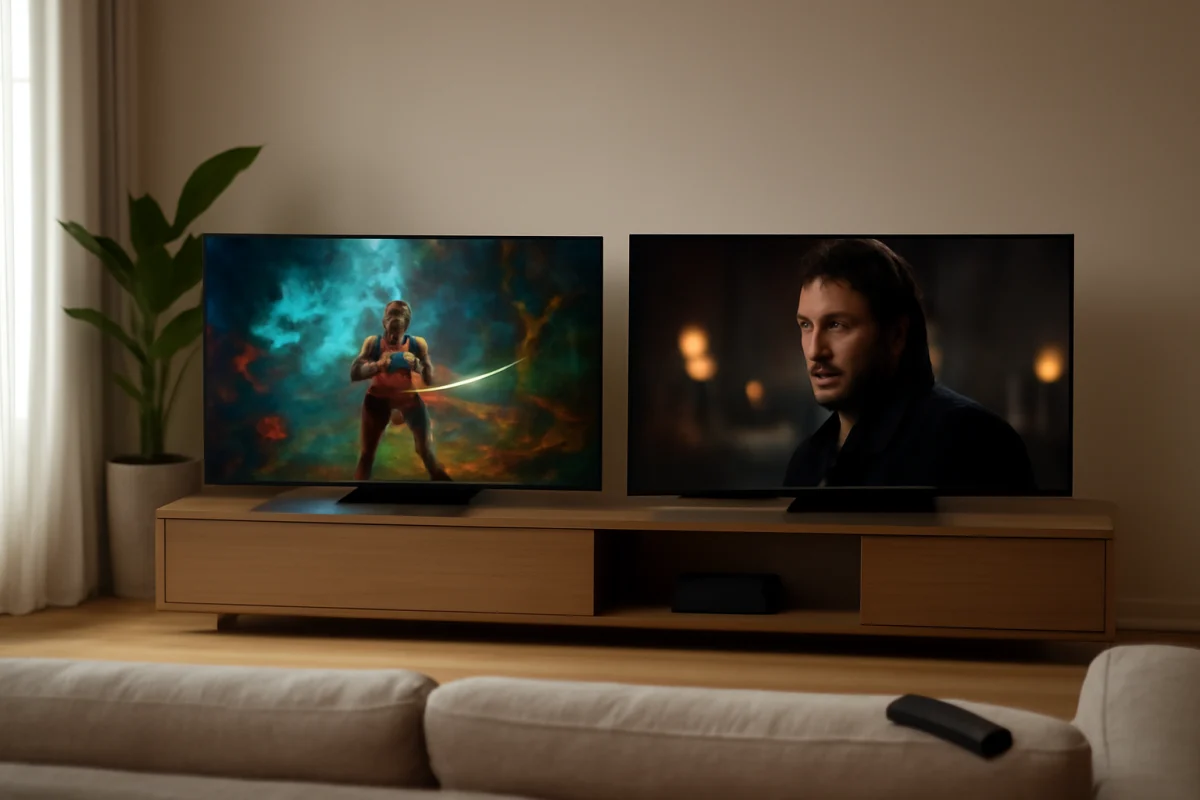
Sony is generally the safer pick for movies, especially if you watch a mixture of streaming titles, broadcast content, DVDs, and older films. Sony TVs are widely known for emphasizing natural image processing rather than making every scene look artificially sharp or overly vivid. That can help skin tones, shadows, and fine details look more balanced.
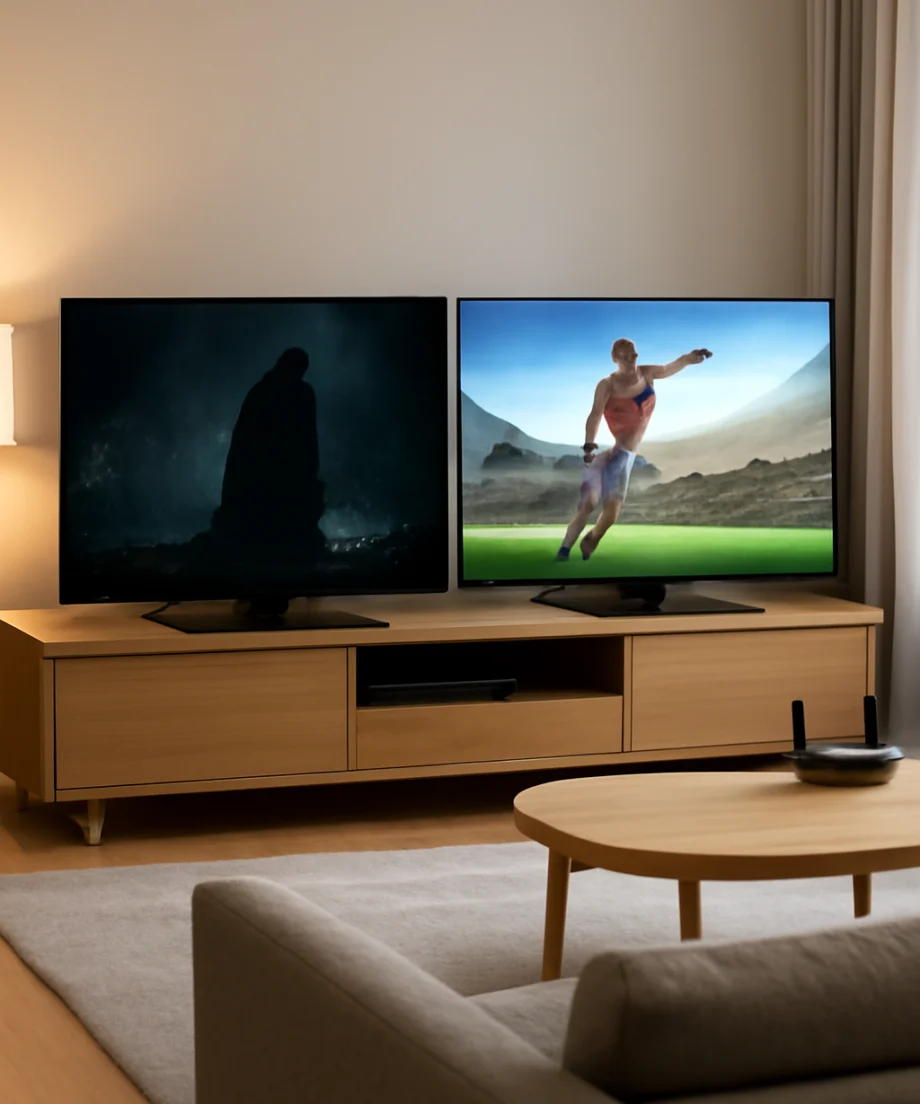
Upscaling is another important factor. Most streaming services and cable providers do not deliver every program at the TV's native resolution. Some movies may also have visible compression, especially when streamed over a congested network. A TV with good processing can reduce the distracting appearance of blockiness, jagged edges, and soft detail. Sony often performs well in this area, although the result still depends on the source and the exact television.
Movie fans should also consider how the TV handles dark scenes. A screen that is too bright or poorly controlled can make black areas look gray, while excessive local contrast processing can hide details in shadows. Hisense offers models with strong contrast and backlight control, but the quality of that control varies more noticeably between product lines. Check independent reviews of the exact model if dark-room movie watching is a priority.
What to check for movie playback
- Look for natural skin tones without needing constant picture adjustments.
- Watch a dark scene and check whether shadow detail remains visible.
- Test subtitles and bright objects against a dark background for distracting blooming or halos.
- Check whether the TV preserves the intended film-like motion instead of making movies look like live video.
- Use the same streaming source and picture mode when comparing two TVs.
Room lighting matters as much as brand choice. In a dark room, contrast and shadow control may matter more than maximum brightness. In a room with windows or strong lamps, a brighter screen and effective reflection handling can make the picture easier to see. Neither Sony nor Hisense wins every room condition automatically.
Which brand is better for sports?
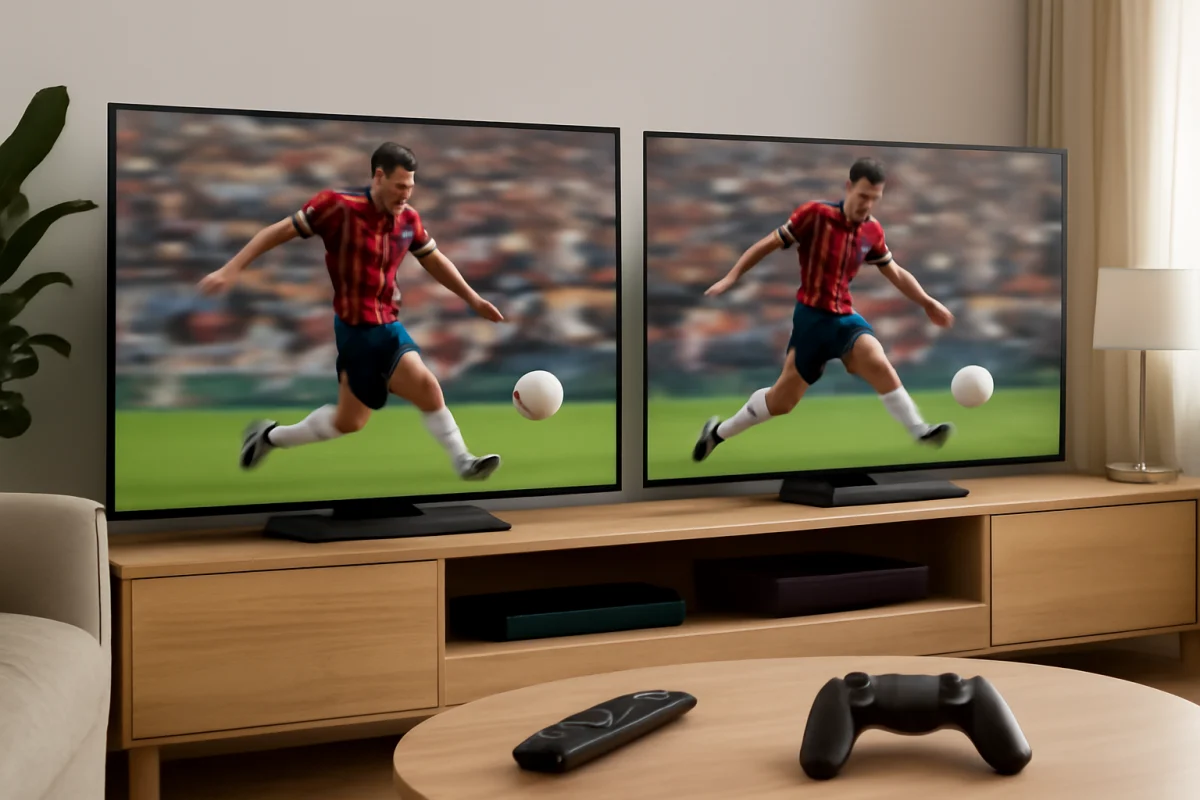
Sports place different demands on a TV. Fast camera pans, moving players, scrolling scores, and bright stadium lights can expose motion blur, uneven screen performance, or poor processing. Hisense can be a compelling option for sports when its model offers high brightness, a large screen, and motion controls that suit your viewing habits. Sony can also be excellent for sports, particularly when you prefer smoother processing and a less exaggerated image.
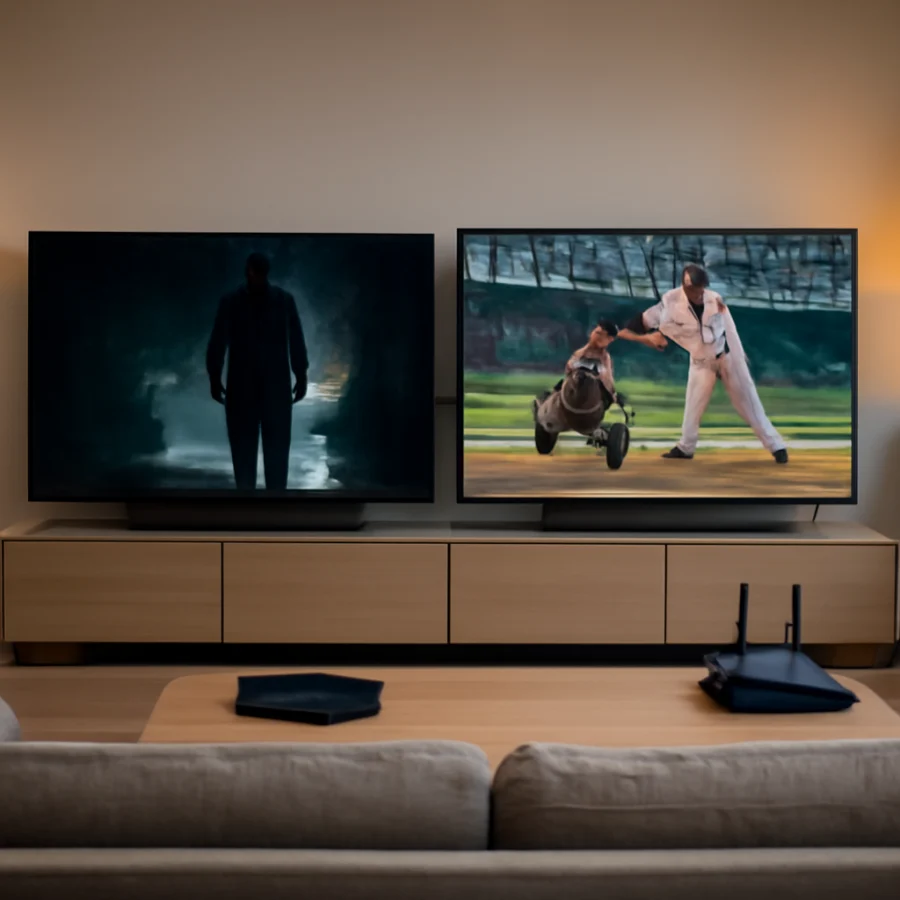
The best sports TV is not necessarily the one with the most dramatic picture in a store. Excessive sharpness, artificial edge enhancement, or aggressive motion smoothing can make the field look unnatural and may create visible artifacts around players. Start with a natural picture mode, then adjust motion processing gradually. The names and locations of these settings vary by model, so use the on-screen help or the manual when necessary.
Sports checks to perform before buying
- View a full-field shot with the camera moving across the action.
- Watch a close-up of a player running and look for trails or double edges.
- Check the scrolling scoreboard for broken letters or flickering.
- Compare the picture from your actual cable box, antenna, or streaming service if possible.
- Stand at the side of the screen to see whether the picture loses brightness or color from your usual seating position.
Sports broadcasts can also look worse because of the source rather than the TV. A weak internet connection, overloaded streaming service, or low-quality broadcast feed can cause softness and interruptions. If a sports stream looks blurry on both televisions, troubleshoot the source before blaming the display. You can find additional guidance in the Wi-Fi and network troubleshooting guide.
Picture quality and processing differences
Sony's main advantage is often the way it processes imperfect content. If your household watches cable channels, local broadcasts, older shows, and a variety of streaming services, consistent processing can be more valuable than a single impressive specification. Sony tends to favor a controlled, realistic presentation, which many viewers find comfortable for long movie sessions.
Hisense often competes strongly on hardware features and screen size. Depending on the model, you may find a bright display, strong contrast, or gaming-oriented options at a comparatively attractive price. However, picture uniformity, motion behavior, and backlight performance can vary. Inspecting the exact model is essential rather than assuming that every Hisense TV performs the same way.
Neither brand is immune to common television problems. A new TV can show uneven brightness, temporary software glitches, HDMI handshake problems, or streaming-app issues. First check the input source, HDMI cable, power connection, and picture settings. If only one app or device looks wrong, test another source before changing advanced TV settings. For brand-specific troubleshooting, see the Sony TV repair and troubleshooting section or the Hisense TV troubleshooting section.
Smart TV experience and everyday use
The smart TV platform can affect your decision as much as picture quality. Compare the apps you actually use, the responsiveness of the home screen, voice control compatibility, and whether your preferred external streaming device connects easily. A TV may have excellent picture quality but still be frustrating if the interface is slow or an important app is unavailable in your region.
Before buying, check the number and type of HDMI connections, especially if you use a soundbar, game console, cable box, or disc player. Requirements differ by model. Do not assume that every HDMI port supports the same features. If a console or soundbar is not detected, start with a different HDMI port, confirm that the device is powered on, and reseat the cable before attempting a reset.
Sound quality and external audio
Built-in TV speakers are convenient, but their performance varies on both brands. A thinner television may have limited space for speakers, while a larger chassis may provide better separation or volume. For movies, clear dialogue is usually more important than maximum loudness. For sports, consistent commentary and crowd sound can matter more than deep bass.
If you plan to use a soundbar or receiver, verify that the TV and audio device support the connection method you need. Audio problems can come from the TV, the external device, the cable, or an incompatible audio format. Test the TV speakers first, then reconnect the soundbar and change only one setting at a time. Avoid a factory reset until basic cable, input, and power checks are complete.
Which one should you buy?
Choose Sony if your priorities are movies, mixed-quality sources, natural image processing, and a consistent viewing experience. It is especially appealing if you watch in a dim room or dislike overly smooth motion and exaggerated colors.
Choose Hisense if you want a large screen, strong brightness, or a feature-rich TV at a value-oriented position, and you are willing to compare individual models carefully. It can be an excellent sports choice when the screen is bright enough for your room and its motion performance looks clean with your actual broadcast or streaming source.
If the two TVs are close in price, use the exact model numbers to compare them rather than relying on the brand name. Give extra weight to the viewing environment, your seating angle, the content source, and the return process. A TV that looks excellent in a showroom may look different at home because of lighting, viewing distance, and picture settings.
For more brand comparisons and practical buying guidance, visit the TV brand comparison section on TV Fix Guide. The safest choice is the model that matches your room and sources—not simply the logo on the bezel.
Comments
0No comments yet. Be the first to share a helpful note or question.
Leave a Comment
Your email address will not be published. Comments are reviewed before appearing on the site.