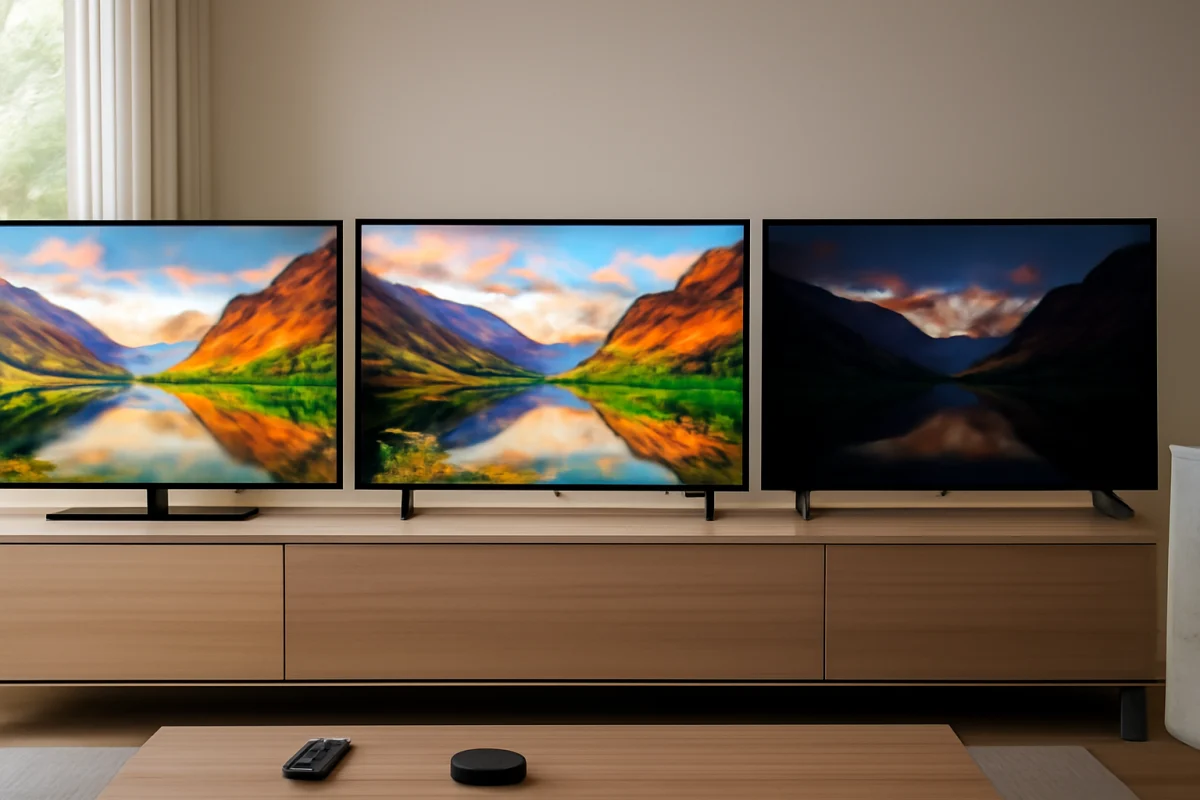
Choose OLED if you want the deepest blacks and the most cinematic picture, QLED if you need high brightness and strong color in a bright room, or LED if you want a practical TV at the lowest typical cost. The best option depends less on the label and more on your room, viewing habits, screen size, and tolerance for possible picture limitations.
Before comparing these technologies, check the basics of your setup. A dark room can make contrast differences easier to see, while direct sunlight can make a very bright display more useful than perfect black levels. Also consider what you watch most: movies, sports, news, video games, or a mix of everything.
What LED, OLED, and QLED actually mean
These names describe different parts of a television's display system, and the labels are not always equally specific.
LED TVs
Most modern LED TVs are LCD panels that use LED backlighting. The liquid-crystal panel creates the image, while LEDs behind or around the panel provide the light. Because the backlight is separate from the individual pixels, an LED TV cannot usually turn each pixel completely off.
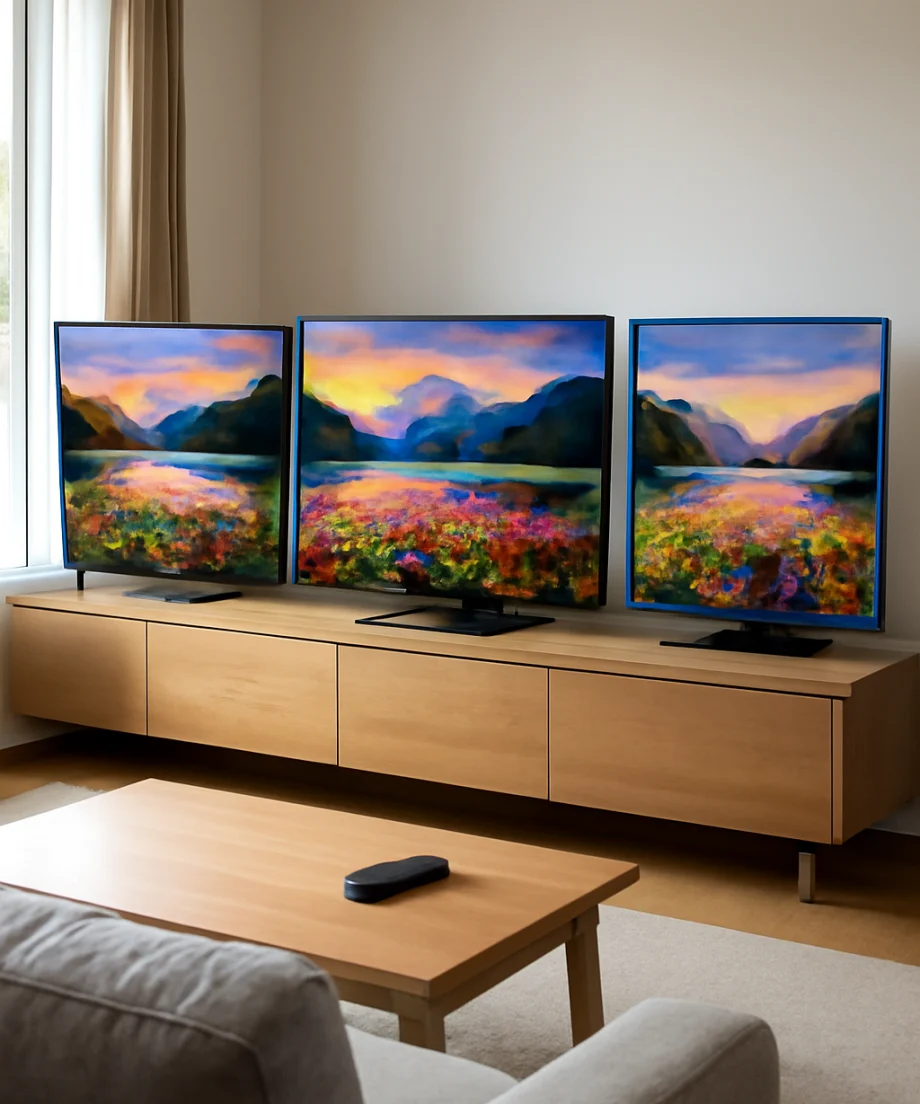
LED TVs can use different backlight arrangements and dimming systems. Some have lighting around the edges, while others use LEDs behind the panel. More advanced models may divide the backlight into zones that dim independently. The exact result varies substantially by model, so the word “LED” alone does not tell you how good the contrast will be.
OLED TVs
OLED pixels produce their own light. When a pixel is supposed to display black, it can turn off rather than blocking a shared backlight. This gives OLED TVs their strongest advantage: very deep blacks and excellent contrast.
OLED panels also tend to maintain picture quality when viewed from the side. That can help in a wide living room where not everyone sits directly in front of the screen. However, maximum brightness, glare handling, and long-term behavior vary between OLED models and generations.
QLED TVs
QLED usually refers to an LCD TV that adds a quantum-dot layer to improve color and brightness. It is still a backlit LCD design, not a self-emitting pixel technology like OLED. As a result, QLED TVs can be very bright and colorful, but their black levels depend on the panel and backlight system.
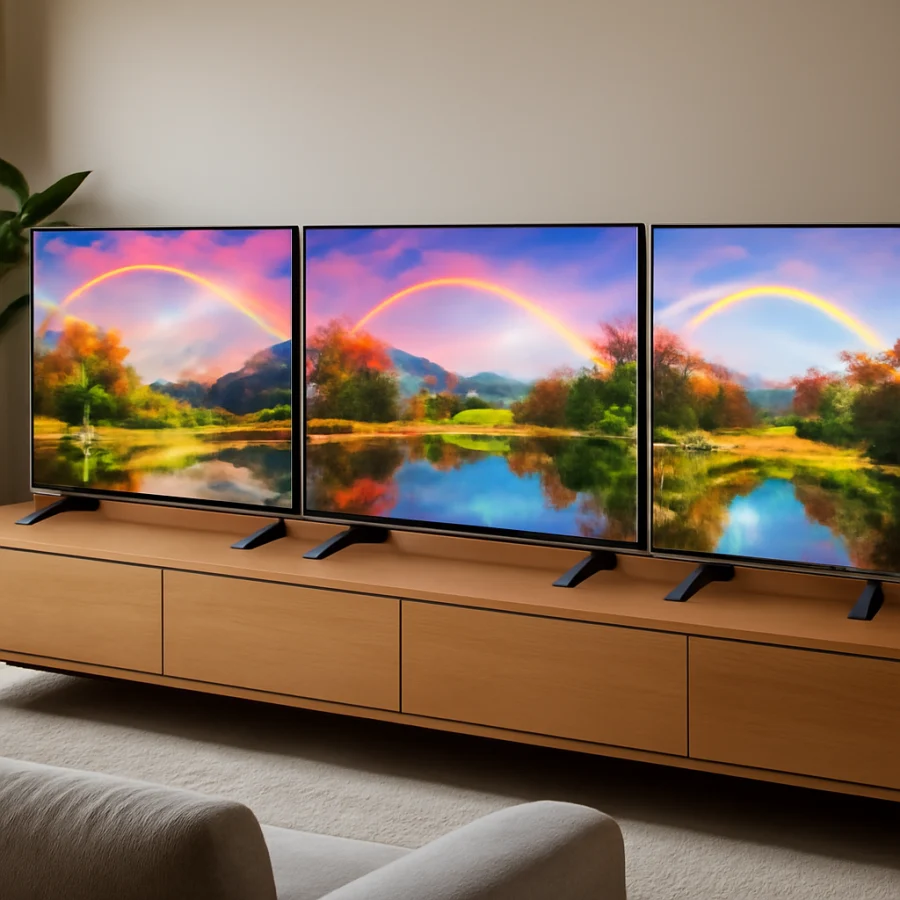
Some QLED televisions also include advanced local dimming. In practice, the backlight system may have as much influence on contrast as the quantum-dot layer. A basic QLED model and a premium QLED model may therefore look noticeably different.
Picture quality: contrast, black levels, and brightness
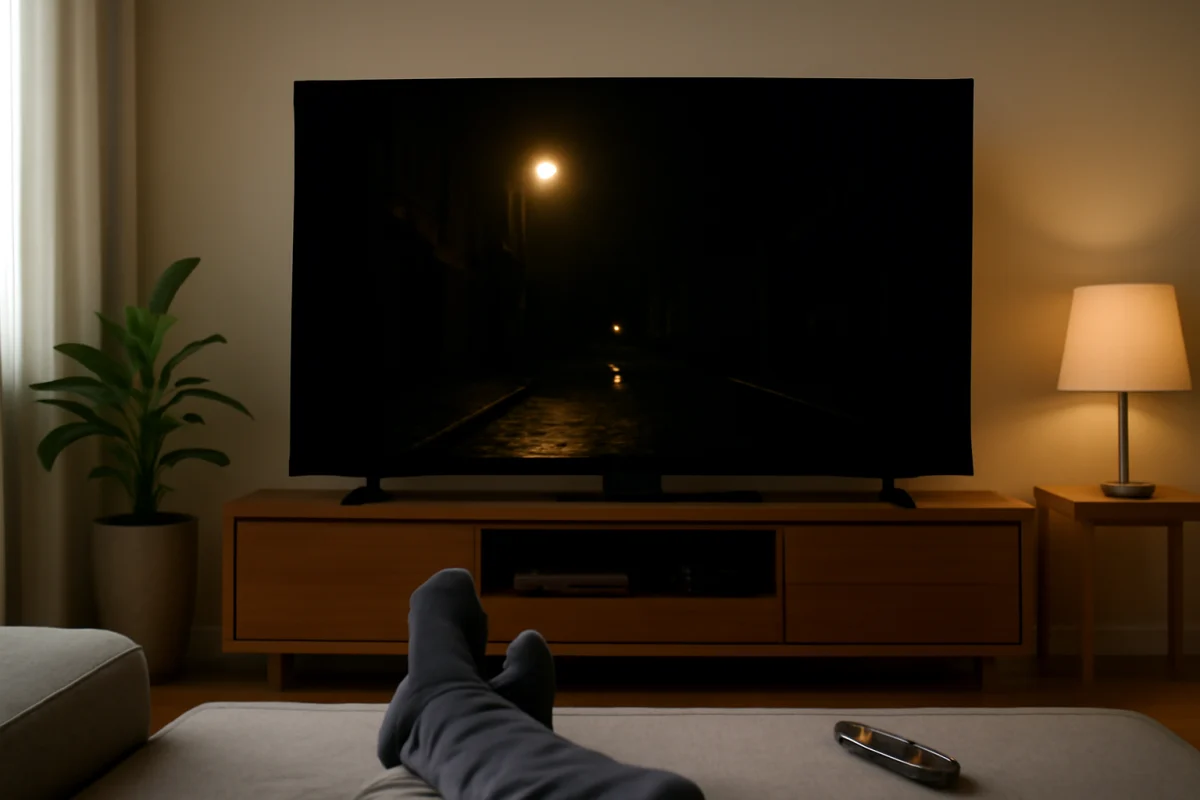
For movie watching in a dark room, OLED generally has the clearest technical advantage. Since individual pixels can switch off, dark scenes can appear more realistic, and bright objects can stand out against a nearly black background. This is especially noticeable in movies and shows with nighttime scenes or wide cinematic bars.
LED and QLED TVs can still produce a very good picture. Their performance depends on the LCD panel, backlight type, local dimming, screen coating, and image processing. A well-designed LED or QLED TV can look better than a poorly designed model with a more prestigious-sounding label.
Brightness is where QLED and other advanced LED TVs often have an advantage. A brighter screen can remain easier to see in a sunlit room, especially when windows or lamps reflect across the display. It can also make high-dynamic-range content look more energetic.
OLED brightness has improved, but it is not automatically the best choice for every bright room. Screen reflections may also matter as much as the panel's maximum brightness. If possible, compare TVs under lighting similar to the room where you will use them.
Which technology is best for your room?
Dark or controlled lighting
OLED is often the strongest choice for a dedicated movie room, bedroom, or living room where you can control the lights. Its black-level performance can make the image feel more dimensional without requiring aggressive picture processing.
A premium LED or QLED TV can also work well in a dark room, particularly if it has effective local dimming. Look for reviews or hands-on comparisons of the specific model rather than relying only on the category name.
Bright living rooms
QLED or a bright LED TV may be more convenient when the screen faces windows, overhead lighting, or a frequently used open room. Higher brightness can help overcome ambient light, while a suitable anti-reflective screen may reduce distracting reflections.
Do not assume that increasing the picture brightness setting will solve every visibility problem. A high setting can wash out blacks, exaggerate glare, or make the image uncomfortable. Moving a lamp, changing the TV angle, or reducing direct light may help before changing picture modes.
Wide seating areas
OLED panels commonly offer strong side-angle viewing, but LCD-based TVs differ greatly. Some maintain color and contrast well off-axis, while others look noticeably faded from the side. If your seating is spread across a large room, check viewing-angle performance for the exact model.
Gaming considerations
For gaming, do not choose based on OLED, QLED, or LED alone. Check the TV's input lag, supported refresh rates, resolution options, variable-refresh support, and the number and type of ports. These specifications can vary within the same product family.
OLED can be attractive to gamers because fast pixel response can make motion look sharp. It also provides excellent contrast in dark games. The tradeoff is that static elements, such as a game HUD, score panel, or news-style interface, may remain in the same position for long periods. Modern TVs include protective features, but the risk is not necessarily eliminated.
QLED and LED TVs can be a sensible choice for gaming in a bright room or for households that display static content for long hours. Their response and motion performance still depend on the individual panel and processing system. Confirm the settings and features on the exact model before buying.
Burn-in and long-term use
OLED buyers should understand the difference between temporary image retention and permanent burn-in. A faint leftover image may disappear after normal use, while permanent uneven wear is a more serious issue. The likelihood depends on factors such as brightness, content type, viewing hours, and how consistently static elements remain on screen.
If you mainly watch varied movies, shows, sports, and games, OLED may be perfectly suitable. If the TV will display a news channel, desktop interface, business dashboard, or the same game interface for many hours every day, an LED or QLED model may provide more peace of mind.
For any TV, avoid leaving a paused image on screen for long periods. Use the display's built-in screen protection or automatic power settings when appropriate. Available options and their names vary by manufacturer and model, so consult the TV's manual or support page rather than assuming every set works the same way.
Color, motion, and upscaling
QLED TVs can produce vivid color, particularly at higher brightness levels, but vivid does not always mean accurate. OLED can also deliver excellent color, and standard LED TVs may look natural when calibrated correctly. If skin tones, sports fields, or animated content look exaggerated, try a less intense picture mode before judging the panel technology.
Motion quality depends on the panel's response, refresh behavior, and processing. Sports viewers should check how smoothly the TV handles fast camera pans and scrolling text. Movie viewers may prefer accurate film motion rather than artificial smoothing. These settings can usually be adjusted, but the controls differ by brand.
Upscaling is important if you watch cable channels, DVDs, older streaming content, or lower-resolution videos. A 4K screen does not automatically make every source look sharp. The processor, source quality, compression, and viewing distance all affect the result. A lower-resolution signal may reveal softness or noise on any display type.
Reliability, energy use, and maintenance
All three categories can provide years of service, but reliability is determined by the specific model, operating conditions, components, and usage. Do not treat a display label as a guarantee of lifespan.
OLED can use less power when much of the image is dark because many pixels are off, but power consumption changes with brightness and content. A bright LCD-based TV can use more energy during demanding scenes, while an LCD may be more consistent in some everyday situations. If energy use matters, check the official energy information for the model you are considering.
Regardless of technology, keep ventilation openings clear, avoid placing the TV in excessive heat, and clean the screen only according to the manufacturer's guidance. Do not spray cleaner directly onto the panel. If you are troubleshooting a dim, discolored, or flickering image, first check the picture mode, connected source, cable, and power cycle before assuming the panel has failed. More practical guidance is available in the Picture & Sound troubleshooting section.
A practical buying checklist
- Measure the room: Consider viewing distance, seating width, windows, and reflections before selecting a screen size or panel type.
- Match the technology to your content: OLED favors contrast-heavy movie viewing, while bright QLED or LED models can suit sports, daytime TV, and mixed use.
- Check the exact model: Backlight design, dimming performance, ports, refresh options, and picture processing can vary significantly.
- Consider static content: Frequent long-duration menus, logos, dashboards, or game interfaces may make an LCD-based TV a more comfortable choice.
- Test the source: A poor cable signal, compressed stream, or low-quality input can make a good television appear disappointing.
- Review return and support information: Policies and service options vary by retailer, region, and manufacturer, so verify them before purchasing.
So, which display technology should you choose?
Pick OLED for the best black levels, strong contrast, and a cinematic experience in a controlled room. Pick QLED when brightness, vivid color, and daytime visibility are priorities. Pick LED when you want a flexible, widely available option and are comparing value across different price levels.
The most important final check is the exact television model. An advanced LED or QLED TV may be a better fit than an entry-level OLED for a bright family room, while OLED may be worth choosing for a dark movie setup. Compare the panel, backlight, viewing angle, gaming features, and expected use together instead of buying from the label alone. For more buying guidance, browse TV Fix Guide's Tech & Specs section.

Comments
0No comments yet. Be the first to share a helpful note or question.
Leave a Comment
Your email address will not be published. Comments are reviewed before appearing on the site.