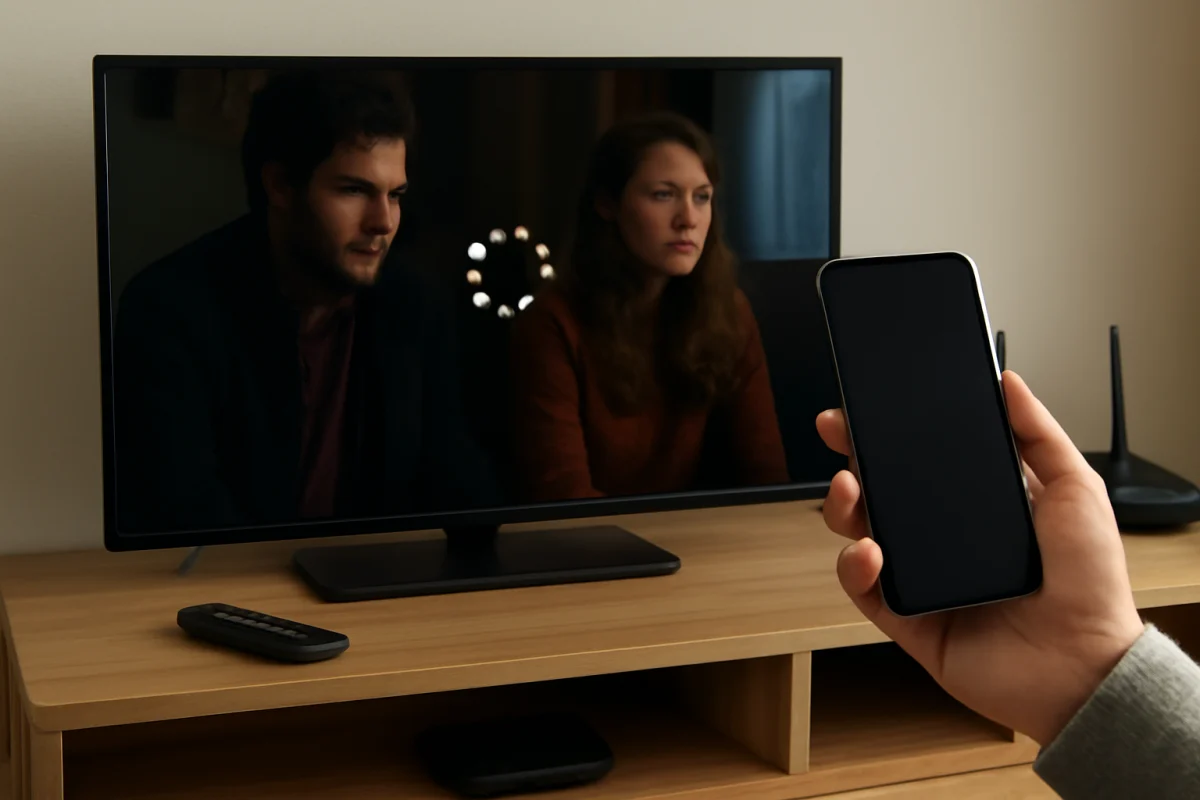
If your Roku TV buffers on every streaming app, start by treating it as a network or TV connection problem rather than an issue with Netflix, Hulu, or another individual service. Pause other internet activity, restart the TV and router, then check whether the Roku TV is receiving a stable connection. These simple steps often resolve buffering without a factory reset.
When only one app buffers, the app or its service may be responsible. When nearly every app pauses, lowers video quality, or takes a long time to start, the more likely causes include weak Wi-Fi, wireless interference, router congestion, a problem with the internet service, or a temporary software or network fault on the TV.
Confirm that every streaming app is affected
Test two or three different apps before changing settings. Choose services that normally work independently, and try starting a different title in each one. If the same buffering happens across several apps, focus on the Roku TV’s internet connection.
If just one app has trouble, check that app separately. Close and reopen it, look for an available update, and test another title. A service outage or problem with a particular video can affect one app while the rest of the TV works normally. You can also find more app troubleshooting guidance in the TV Fix Guide streaming apps section.
Check whether other devices are using the connection
Streaming can become unreliable when the same home network is handling large downloads, cloud backups, game updates, video calls, or several active streams. Temporarily pause those activities and test the Roku TV again.
Do not assume that an idle-looking phone or computer is doing nothing. Automatic updates and photo backups can continue in the background. If possible, stop large transfers on other devices for a few minutes and avoid testing while someone else is watching high-resolution video.
This check is useful because it separates a bandwidth or congestion problem from a Roku TV problem. If buffering stops when other activity is paused, the TV may be working correctly but competing for a limited or unstable connection.
Restart the Roku TV and network equipment
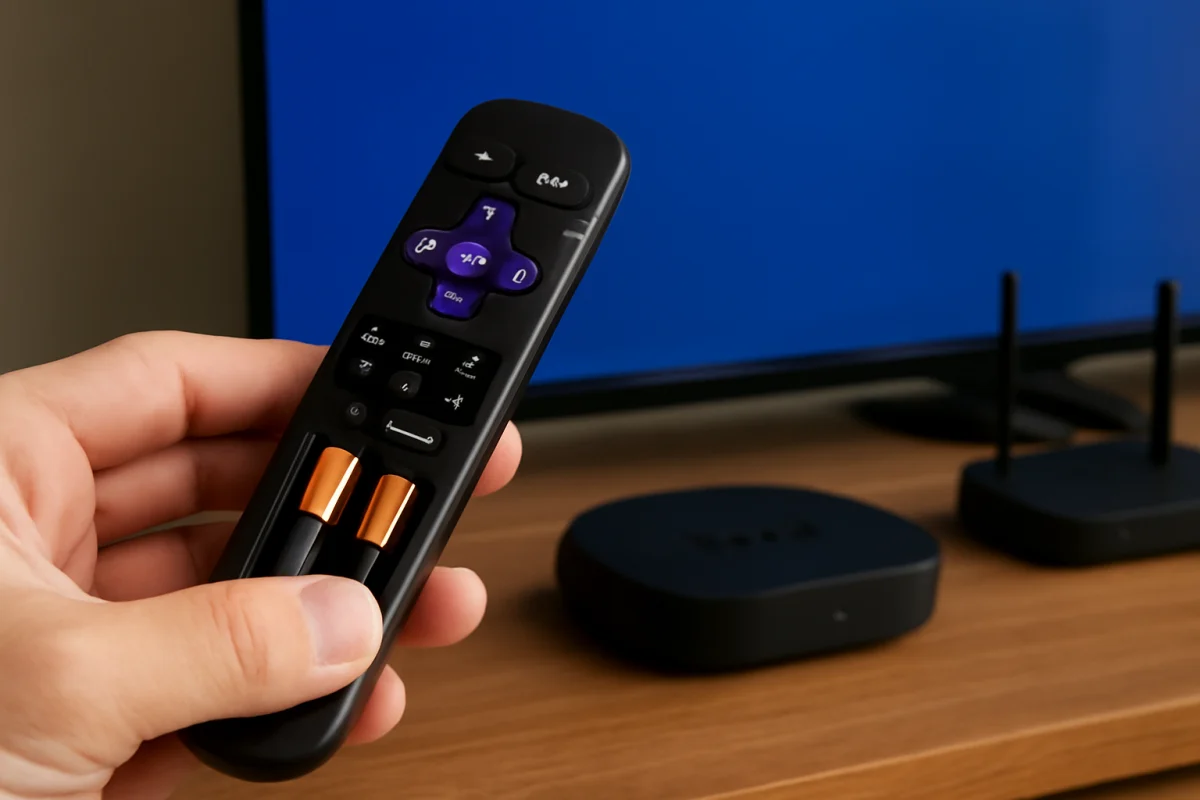
A full restart can clear a temporary connection problem, but restart the devices in a deliberate order:
- Turn off the Roku TV.
- Unplug the TV from the wall outlet, if convenient and safe to do so.
- Unplug the modem and router or the single gateway device supplied by your internet provider.
- Wait about a minute before reconnecting the network equipment.
- Allow the modem and router to finish starting up before powering on the TV.
- Open a streaming app and test playback again.
The indicator lights and startup time vary by equipment, so wait until your normal home internet connection has returned rather than relying on a specific light pattern. If you use a mesh Wi-Fi system, reconnect the main unit first and give the other units time to rejoin the network.
Check the Roku TV’s network connection
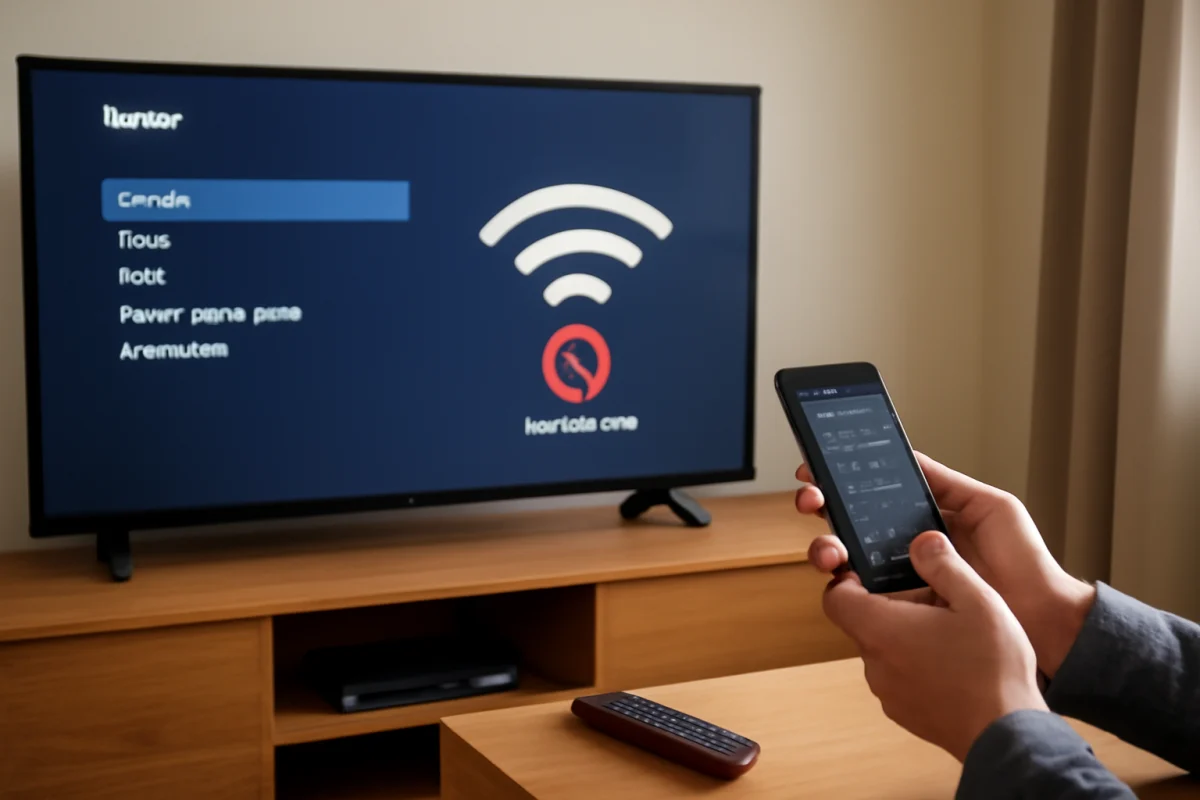
Open the TV’s network settings and review the connection details or connection test, if your model provides one. Roku TV menu names and available diagnostics can vary by software version and television manufacturer, so follow the wording shown on your screen.
Look for signs that the TV is connected to the wrong network, has lost its saved connection, or reports a weak wireless signal. If the TV shows that it is connected but streaming still buffers, the connection may be technically active but unstable. A connection test is helpful, but it cannot always reveal short interruptions that happen during playback.
Reconnect to your home Wi-Fi if the saved connection appears unreliable. You may need to select the network again and enter the wireless password. Use care when choosing a network in an apartment, hotel, or multi-unit building; a nearby network with a similar name can be easy to select by mistake.
Improve the Wi-Fi signal near the TV
A Roku TV can remain connected while still receiving an inconsistent signal. The TV’s location, walls, cabinets, appliances, and the distance from the router all affect wireless performance.
Try a quick location test
Move the router temporarily closer to the TV, if you can do so without stretching cables or blocking ventilation. Alternatively, test the TV from a location with fewer walls between it and the router, if moving the TV is practical. If buffering improves, the underlying issue is probably signal quality or interference rather than the streaming app.
Keep the router in an open, elevated area when possible. Avoid placing it behind the television, inside a closed cabinet, next to large metal objects, or immediately beside devices that may interfere with wireless signals. The best placement depends on the layout of your home, so use playback stability as the test rather than relying on a particular distance.
Consider the TV’s wireless limitations
Some Roku TV models connect differently depending on their hardware and software. The available wireless bands and network options can vary, so do not assume every model supports the same settings. If your router presents separate network names, test the one that provides a stronger, more stable connection in the TV’s location.
If your router automatically combines wireless bands under one network name, you may not be able to choose a band manually from the TV. In that case, test the connection after moving the router or adjusting its placement before changing advanced router settings.
Test the Roku TV with a wired connection
If your Roku TV has an Ethernet port and your home network allows it, connect the TV directly to the router with a suitable network cable. This is one of the most useful diagnostic tests because it removes many wireless variables.
If buffering stops over Ethernet, the internet service may be fine and the problem is likely Wi-Fi signal strength, interference, router placement, or wireless configuration. You can then decide whether to keep the wired connection, move the router, improve coverage with compatible networking equipment, or ask for help configuring the wireless network.
If the TV still buffers over a wired connection, continue testing the internet service and the television itself. A wired connection does not eliminate every possible cause, including router faults, service interruptions, or a problem with the TV’s software.
Check the internet service with another device
Use a phone or computer on the same home network and test several websites or a streaming service. Ideally, test the device near the Roku TV and at the same time buffering occurs. If other devices also lose connection, load pages slowly, or struggle with video, the problem may be with the router, modem, or internet provider.
A speed test can provide useful context, but speed alone does not prove that a connection is stable. Short dropouts, high latency, wireless interference, and congestion can cause buffering even when a speed test reports an acceptable result. Run more than one test at different times if the issue is intermittent, and compare the results with normal performance in your home.
If all devices are affected, contact your internet provider or check its service-status information. Ask whether there is a known outage or a line issue. Before contacting support, note whether the problem affects wired devices, Wi-Fi devices, or both.
Update the Roku TV and streaming apps
Roku TVs normally manage software updates through their settings, but the exact menu path and wording can vary by model. Open the system or software update area and check for an available update while the TV is connected to the internet.
Also check whether the affected apps have pending updates. If the TV cannot remain online long enough to complete an update, resolve the connection problem first or use a temporary wired connection if available. Avoid unplugging the TV during an update unless the on-screen instructions specifically tell you to do so.
An update may fix compatibility or connection behavior, but it is not a substitute for diagnosing weak Wi-Fi. If buffering began immediately after a software change, restart the TV and retest several apps before taking more disruptive steps.
Remove and reinstall an affected app
Reinstalling an app is mainly useful when one app behaves differently from the others. If every app buffers, reinstalling all of them is unlikely to solve the network problem and can create unnecessary work.
For a single troublesome app, remove it only if the TV allows that action, restart the TV if prompted or practical, and add the app again. You may need to sign in afterward. Make sure you know the account details before removing an app, and remember that app availability and menu options can vary by model and service.
Check for overheating or unusual TV behavior
Make sure the television’s ventilation openings are not covered by a wall, cabinet, blanket, or other object. Excess heat can contribute to unreliable operation, although buffering is more commonly related to the network. Leave enough open space around the TV as recommended in its documentation.
Notice whether the TV is also freezing in menus, restarting, losing sound, or responding slowly outside streaming apps. Those symptoms suggest a broader TV or software problem rather than simple internet congestion. If the TV becomes unusually hot, repeatedly restarts, or smells like overheated electronics, turn it off and seek qualified service instead of continuing to test it.
Use a factory reset only as a last resort
A factory reset erases personal settings, saved network details, installed apps, and account information. It may help with persistent software corruption, but it will not fix weak Wi-Fi, a failing router, an internet outage, or a congested connection. Do not reset the TV until you have tested the network with another device and, if possible, tried a wired connection.
If you decide a reset is appropriate, use the reset option in the TV’s settings and follow the on-screen instructions. The exact location and wording vary by Roku TV manufacturer and model. Make sure you have the information needed to set up the TV again, including your Wi-Fi password and streaming account sign-in details.
When to contact support
Contact your internet provider if multiple devices buffer, disconnect, or perform poorly. Contact the TV manufacturer or Roku support if the problem continues across several networks, including a reliable wired connection, or if the TV shows other system problems. Have the following details ready:
- Whether every streaming app is affected
- Whether other devices on the same network have the same problem
- Whether the TV works better over Ethernet, if available
- Whether restarting the router and TV provides only temporary relief
- Whether the TV also freezes, restarts, or behaves abnormally in its menus
For more practical connection checks, see the Wi-Fi and network troubleshooting guide. You can also browse the Roku troubleshooting section for related TV and device problems.
What the results tell you
If restarting the router fixes buffering temporarily, look for congestion, overheating network equipment, or an intermittent service problem. If moving the router or using Ethernet solves it, focus on Wi-Fi coverage. If every device is affected, work with your internet provider. If only the Roku TV remains unreliable on a stable wired connection, investigate TV software or hardware support.
This step-by-step approach helps you identify the cause before making major changes. In most cases, the fastest path is to test another app, restart the network, verify the TV’s connection, and compare Wi-Fi with a wired connection when possible.
Comments
0No comments yet. Be the first to share a helpful note or question.
Leave a Comment
Your email address will not be published. Comments are reviewed before appearing on the site.